
Tea and Herbs
Dandelion Leaf
$8.002 oz
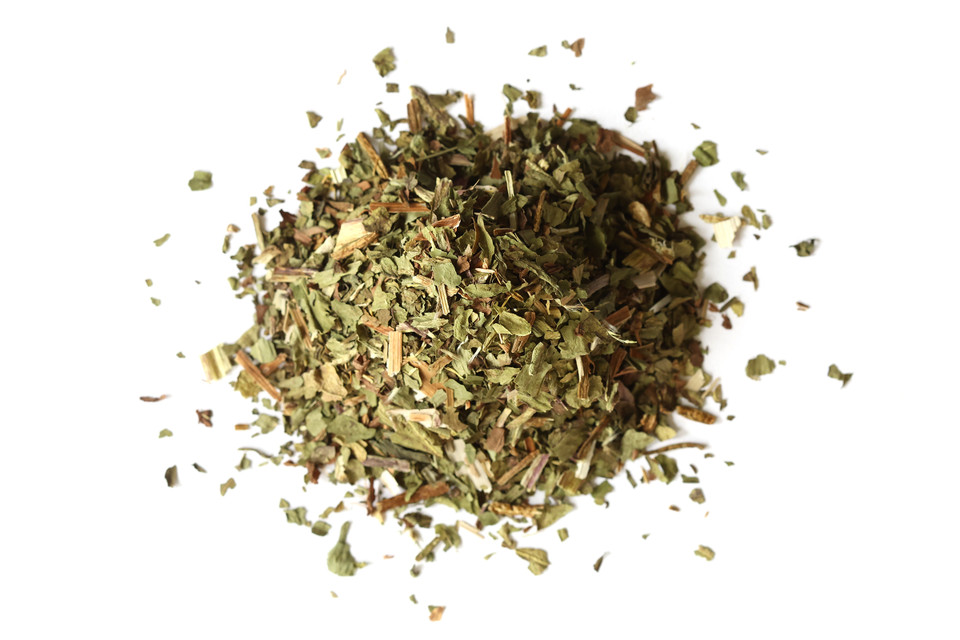
Taraxacum officinale has a long history of use worldwide as an edible food and restorative tonic. Dandelion leaves can be eaten fresh in spring, and the long taproot is dug for its beneficial properties in the fall. Our organic dandelion leaf makes an excellent addition to herbal tea blends. Leaves can also be brewed as dandelion leaf tea, tinctured as dandelion extract, or added to soups. Dandelion was traditionally used in many systems of medicine to support digestive and gastrointestinal health.* Additionally, dandelion was traditionally used to support liver health, healthy urinary function and has mild diuretic action.* Dandelion is a sunny, subtle, yet incredible plant that has been used for thousands of years in Traditional Chinese Medicine and is mentioned in traditional Arabian medicine in the tenth century. It has been used for centuries in traditional medicine practices all over the world as a restorative tonic, edible food, and in herbal beers and wines. Dandelion bears a sun-yellow flower head (which is actually composed of hundreds of tiny flowers) typical of the Asteraceae family, that closes in the evening or during cloudy weather and opens back up in the morning, much like its cousin calendula. When the flower is closed, to some, it looks like a pig’s nose, hence one of its names, ‘swine’s snout.’ It is a perennial herb with deeply cut leaves that form a basal rosette, somewhat similar to another family member, the wild lettuce, and has a thick tap root which is dark brown on the outside and white on the inside. It is native to most of Europe, Asia, and northern Africa, naturalized all over the world, and commonly found growing alongside roads and in lawns as a common weed. Dandelion is produced commercially in Bulgaria, Hungary, Poland, Romania, the former Yugoslavia, and the United Kingdom. However, dandelion grows practically everywhere, and is wild collected in a variety of climates, even in the Himalayas up to about 12,000 feet, where it is often gathered for use in Ayurvedic medicine (the traditional healing system of India). Dandelion will grow anywhere, but will produce more substantial roots in moist, rich, deep soil. Pharmacopeial grade dandelion leaf is composed of the dried leaves collected before flowering and the root collected in autumn or whenever its inulin content is the highest. The use of dandelion was first recorded in writing in the Tang Materia Medica (659 B.C.E.), and then later noted by Arab physicians in the 10th century. In the United States, various indigenous cultures considered dandelion to be a prized edible, a gastrointestinal aid, a cleansing alterative, and a helpful poultice or compress. The Bella Coola from Canada made a decoction of the roots to assuage gastrointestinal challenges; the Algonquian ate the leaves for their alterative properties and also used them externally as a poultice. Additionally, the Aleut steamed leaves and applied them topically to sore throats. The Cherokee believed the root to be an alterative as well and made a tea of the plant (leaves and flowers) for calming purposes. It is interesting to note that dandelion was used by the Iroquois as well. They made a tea of the whole plant, and also considered it be an alterative tonic. In the southwestern U.S., in Spanish speaking communities practicing herbalism, dandelion is called ‘chicoria’ or ‘diente de leon.’ In Traditional Chinese Medicine (TCM) it is referred to as ‘Xin Xiu Ben Cao’ or ‘Pu Gong Ying’ and considered to be energetically sweet, drying, and cooling. According to TCM, dandelion clears heat from the liver and has a beneficial effect on the stomach and lungs, and it can uplift the mood and support lactation. The root was listed as official in the United States National Formulary, in the pharmacopeias of Austria and the Czech Republic, in the Ayurvedic Pharmacopoeia, and the British Herbal Pharmacopoeia amongst others. Herbalist Rosemary Gladstar strongly promotes this herb, saying that it is “invaluable to women going through menopause.” Dandelion root’s benefit to the digestive tract is twofold as it contains inulin and is also a bitter digestive tonic which tones the digestive system and stimulates the appetite. It calms heat and also hot emotions and is thus helpful in those that are irritated. The young dandelion greens (rather than the older ones which become too bitter) are wonderful in salads. These leaves can also be steamed like spinach (although they take a little longer to cook than spinach) and spiced with salt, pepper, and butter. Other savory spices such as nutmeg, garlic, onion or lemon peel can be added as well. Dandelion leaf is considered energetically bitter, drying, and cooling. Precautions No known precautions. We recommend that you consult with a qualified healthcare practitioner before using herbal products, particularly if you are pregnant, nursing, or on any medications. *This statement has not been evaluated by the Food and Drug Administration. This product is not intended to diagnose, treat, cure, or prevent any disease. For educational purposes only.
Size
- Packed to order, never sitting on a shelf
- Loose leaf, steeped your way
- $8 flat shipping · free over $100
Details
Taraxacum officinale has a long history of use worldwide as an edible food and restorative tonic. Dandelion leaves can be eaten fresh in spring, and the long taproot is dug for its beneficial properties in the fall. Our organic dandelion leaf makes an excellent addition to herbal tea blends. Leaves can also be brewed as dandelion leaf tea, tinctured as dandelion extract, or added to soups. Dandelion was traditionally used in many systems of medicine to support digestive and gastrointestinal health.* Additionally, dandelion was traditionally used to support liver health, healthy urinary function and has mild diuretic action.* Dandelion is a sunny, subtle, yet incredible plant that has been used for thousands of years in Traditional Chinese Medicine and is mentioned in traditional Arabian medicine in the tenth century. It has been used for centuries in traditional medicine practices all over the world as a restorative tonic, edible food, and in herbal beers and wines. Dandelion bears a sun-yellow flower head (which is actually composed of hundreds of tiny flowers) typical of the Asteraceae family, that closes in the evening or during cloudy weather and opens back up in the morning, much like its cousin calendula. When the flower is closed, to some, it looks like a pig’s nose, hence one of its names, ‘swine’s snout.’ It is a perennial herb with deeply cut leaves that form a basal rosette, somewhat similar to another family member, the wild lettuce, and has a thick tap root which is dark brown on the outside and white on the inside. It is native to most of Europe, Asia, and northern Africa, naturalized all over the world, and commonly found growing alongside roads and in lawns as a common weed. Dandelion is produced commercially in Bulgaria, Hungary, Poland, Romania, the former Yugoslavia, and the United Kingdom. However, dandelion grows practically everywhere, and is wild collected in a variety of climates, even in the Himalayas up to about 12,000 feet, where it is often gathered for use in Ayurvedic medicine (the traditional healing system of India). Dandelion will grow anywhere, but will produce more substantial roots in moist, rich, deep soil. Pharmacopeial grade dandelion leaf is composed of the dried leaves collected before flowering and the root collected in autumn or whenever its inulin content is the highest. The use of dandelion was first recorded in writing in the Tang Materia Medica (659 B.C.E.), and then later noted by Arab physicians in the 10th century. In the United States, various indigenous cultures considered dandelion to be a prized edible, a gastrointestinal aid, a cleansing alterative, and a helpful poultice or compress. The Bella Coola from Canada made a decoction of the roots to assuage gastrointestinal challenges; the Algonquian ate the leaves for their alterative properties and also used them externally as a poultice. Additionally, the Aleut steamed leaves and applied them topically to sore throats. The Cherokee believed the root to be an alterative as well and made a tea of the plant (leaves and flowers) for calming purposes. It is interesting to note that dandelion was used by the Iroquois as well. They made a tea of the whole plant, and also considered it be an alterative tonic. In the southwestern U.S., in Spanish speaking communities practicing herbalism, dandelion is called ‘chicoria’ or ‘diente de leon.’ In Traditional Chinese Medicine (TCM) it is referred to as ‘Xin Xiu Ben Cao’ or ‘Pu Gong Ying’ and considered to be energetically sweet, drying, and cooling. According to TCM, dandelion clears heat from the liver and has a beneficial effect on the stomach and lungs, and it can uplift the mood and support lactation. The root was listed as official in the United States National Formulary, in the pharmacopeias of Austria and the Czech Republic, in the Ayurvedic Pharmacopoeia, and the British Herbal Pharmacopoeia amongst others. Herbalist Rosemary Gladstar strongly promotes this herb, saying that it is “invaluable to women going through menopause.” Dandelion root’s benefit to the digestive tract is twofold as it contains inulin and is also a bitter digestive tonic which tones the digestive system and stimulates the appetite. It calms heat and also hot emotions and is thus helpful in those that are irritated. The young dandelion greens (rather than the older ones which become too bitter) are wonderful in salads. These leaves can also be steamed like spinach (although they take a little longer to cook than spinach) and spiced with salt, pepper, and butter. Other savory spices such as nutmeg, garlic, onion or lemon peel can be added as well. Dandelion leaf is considered energetically bitter, drying, and cooling. Precautions No known precautions. We recommend that you consult with a qualified healthcare practitioner before using herbal products, particularly if you are pregnant, nursing, or on any medications. *This statement has not been evaluated by the Food and Drug Administration. This product is not intended to diagnose, treat, cure, or prevent any disease. For educational purposes only.
Brewing
Water 200-212°F. Steep 5-10 minutes. Leaves and flowers need less time; roots and barks often need more. Roots, bark and dense seeds may benefit from a longer steep or a gentle covered simmer.
- Use about 1 level teaspoon of loose tea per 6-8 oz. of water unless the product label says otherwise.
- For blended teas, follow the temperature of the most delicate true-tea base (green/white before black).
Shipping & returns
Packed and shipped within 48 hours. $8 flat rate, free over $100. Something wrong? Call 815-641-7800 and we will make it right.
Want your name on the bag?
You Create IT. You Name IT. You Label IT. Over 5 million flavor combinations.
Build a custom labelCustomers also bought
 Tea and Herbs
Christmas Spice
Cinnamon, cloves, nutmeg and orange blended with black tea. Brewing Instructions:1 level tsp./6 oz serving Steep Time: 4-5 min Temp: 203-212° F Ingredients: Black Tea, N/A Flavoring, Cloves, Cinnamon Pieces and Orange Peels.
$4.00 - $12.00
 Tea and Herbs
Cinnamon Orange Spice
Cinnamon, orange peel, cloves and nutmeg combine to create a spicy tasting cup of tea, sweet without the sugar. Contains Caffeine Brewing Instructions:1 level tsp./6 oz serving Steep Time: 4-5 min Temp: 203-212° F
$4.00 - $12.00
 Tea and Herbs
Colonial Bohea
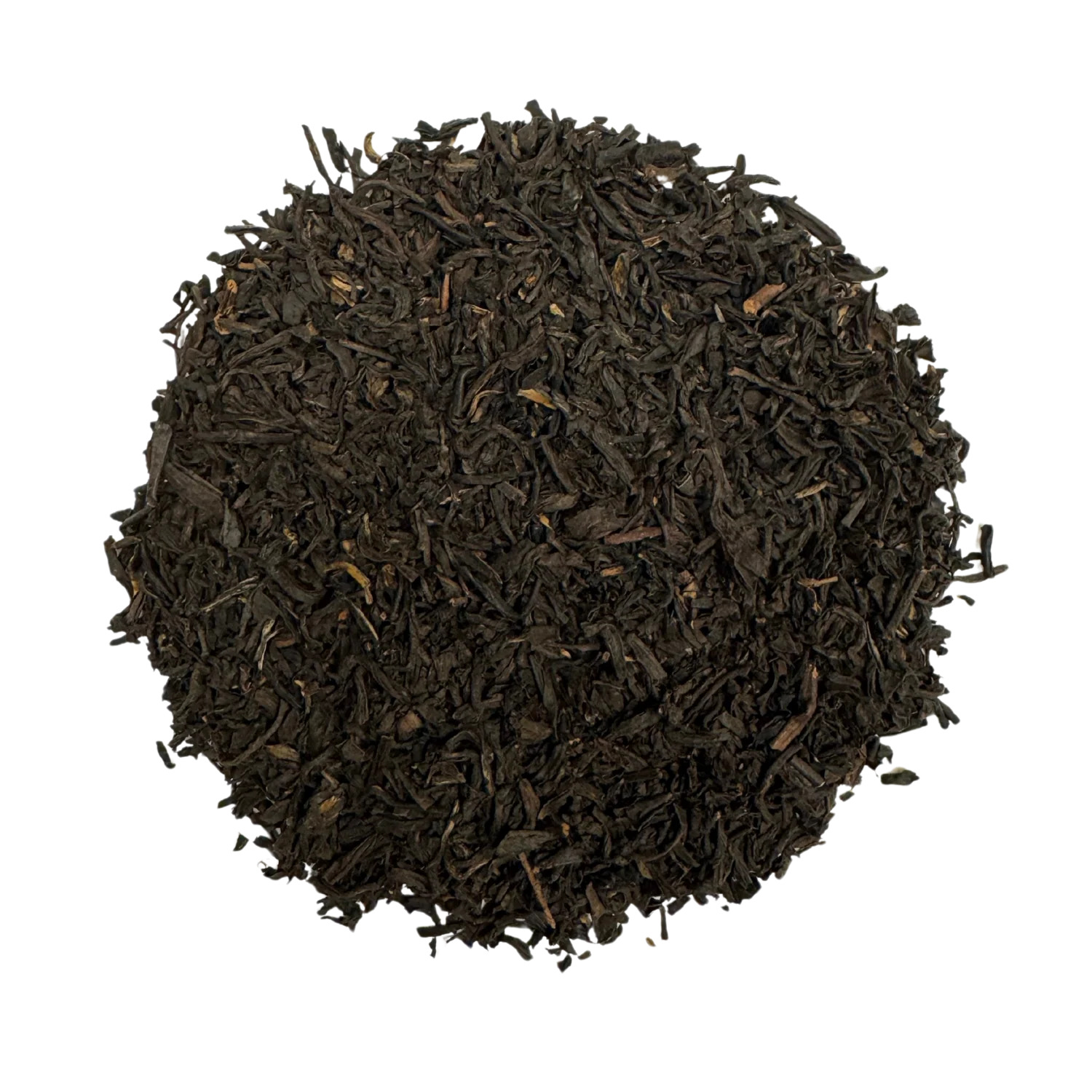
Bohea tea, (pronounced “Boo-hee” – Ukers 510), was by far the largest tea import during colonial times. Sometimes called Bohea Souchong or Lapsang Bohea, the blend originated in China with trade to the British and Dutch East India Companies. It was so popular that the word bohea became the slang term for tea. The blend
$4.00 - $12.00
 Tea and Herbs
Congou
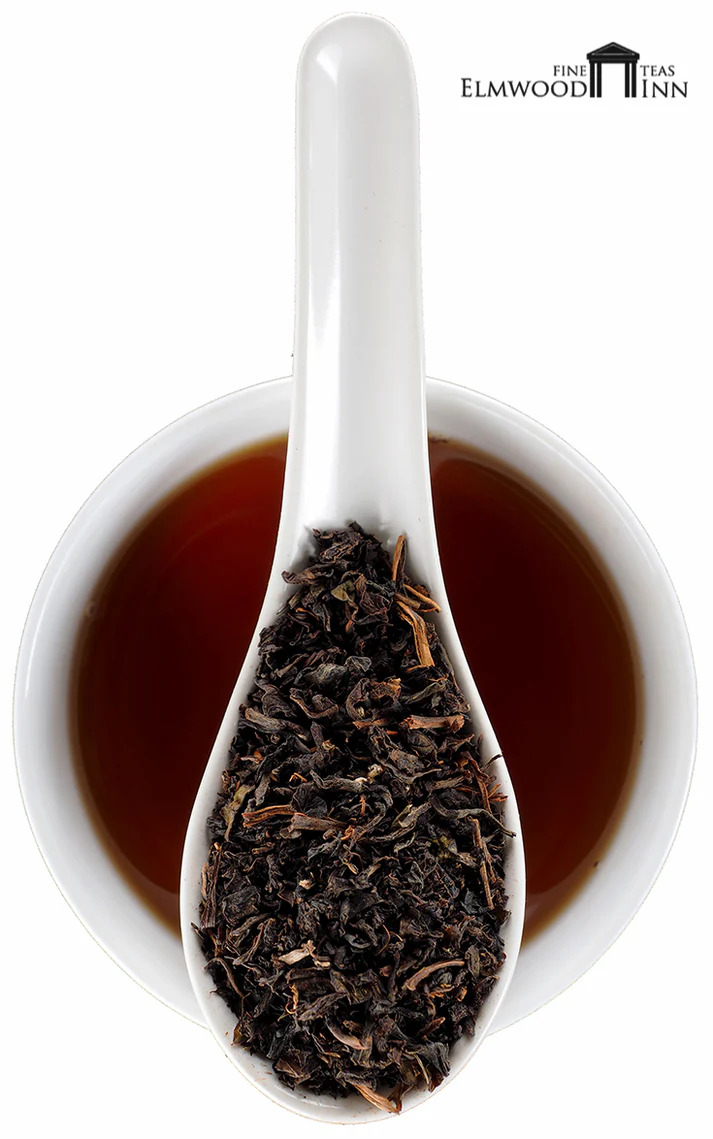
This Chinese black tea was one of the five teas tossed into Boston Harbor on December 16, 1773. Congou was made in a more disciplined manner than the common Bohea black tea and was higher priced. If you are a fan of China’s black teas, such as Keemun, you’ll appreciate this historic and delicious leaf. Brewing Instruct
$4.00 - $12.00
More like this
 Tea and Herbs
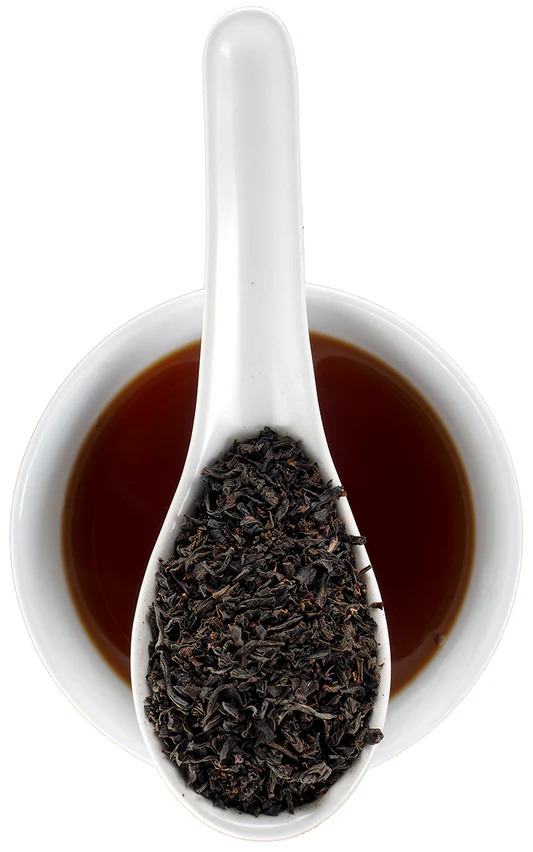
Abigail's Blend
This historic blend of black teas to be reminiscent of the Chinese black teas tossed overboard in 1773 by using teas from across the British Empire, including China, India, and Kenya. If you are a fan of English Breakfast blends – with or without milk – you will love this tea. It also makes a great iced tea. Let’s just
$4.00 - $12.00
 Tea and Herbs
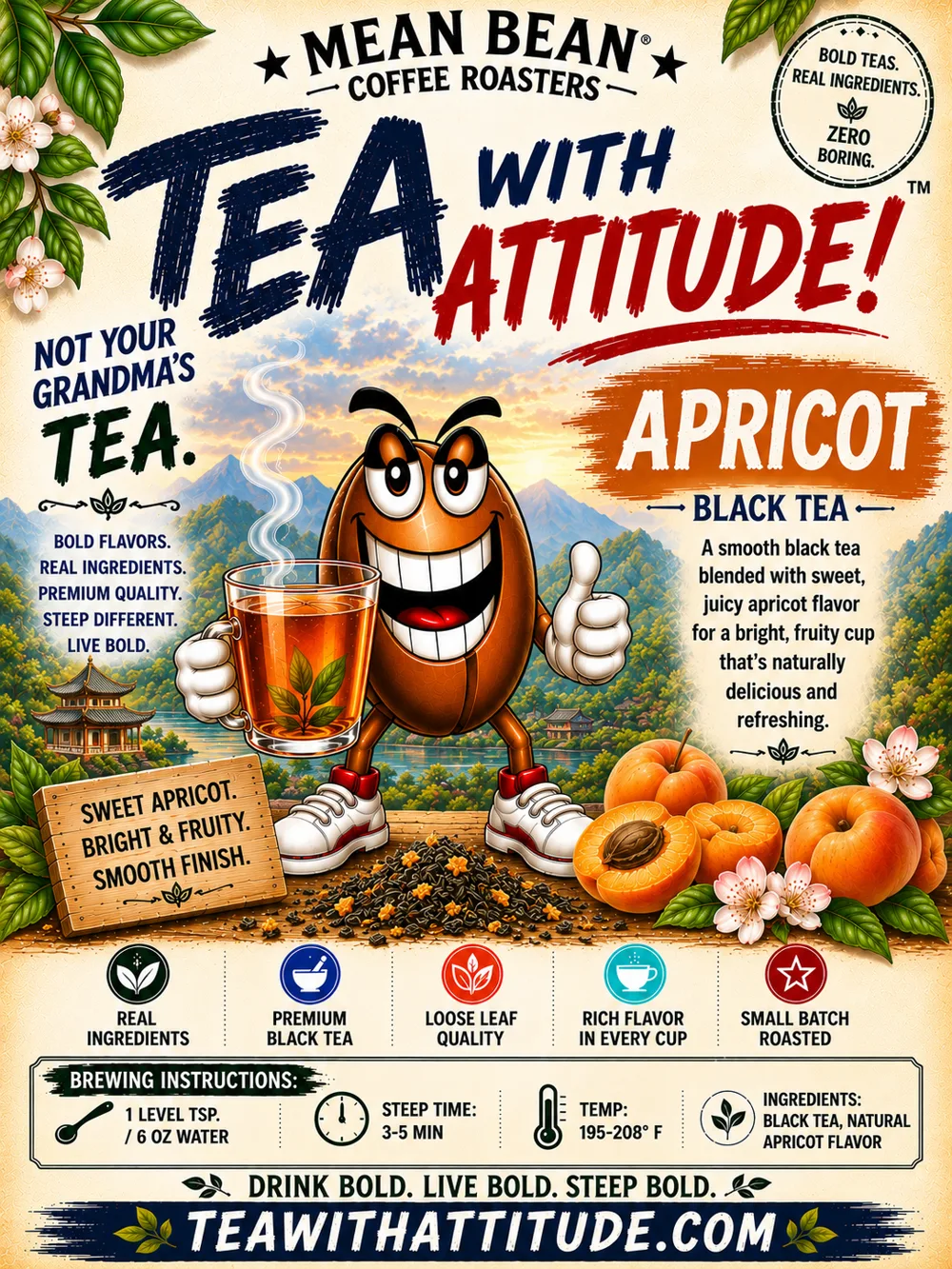
Apricot Black Tea
Imagine being whisked away to a beautiful fresh apricot orchard. The rich, sweet and elegant flavor of apricots is infused with our blend of black teas from Kenya, Ceylon, and Indonesia. Enhanced with dried blossoms that create a refreshing cup of tea. Delicious hot or over ice. Brewing Instructions:1 level tsp./6 oz s
$4.00 - $12.00
Tea and HerbsAssam CTC
This fast-steeping black tea from the organic Dinjoye Gardens in the Assam region of India is known around the world for its full-bodied flavor that combines well with milk. This grade is found in a host of English and Irish morning tea blends. Think of it as comfort food! CTC stands for Cut-Tear-Curl, a process invent
$4.00 - $12.00
 Tea and Herbs
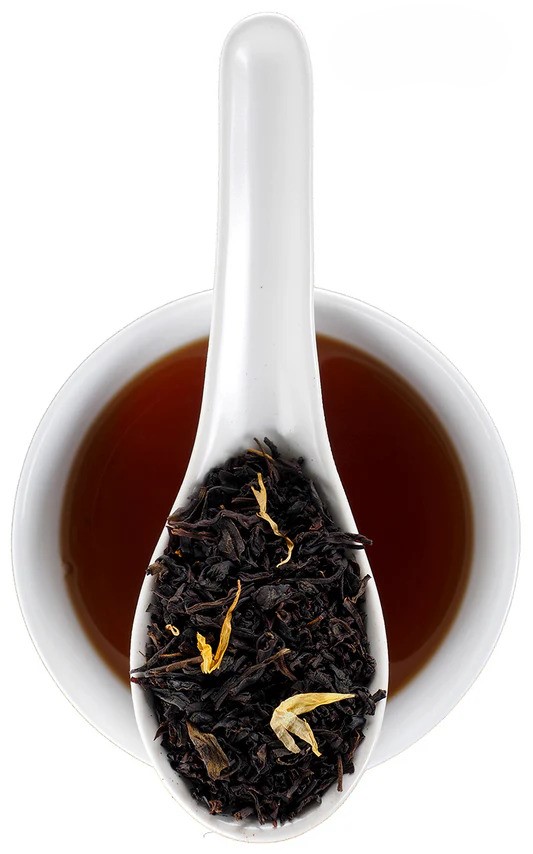
Bourbon
Inspired by Kentucky’s world-famous bourbon heritage, this blend marries bold Chinese Yunnan with smoky Lapsang Souchong to echo the complexity of charred oak barrels. Smooth notes of caramel and vanilla shine through, and while completely alcohol-free, each sip delivers the warmth, sweetness, and layered character bou
$4.00 - $12.00